
GEORGE BROWN COLLEGE YEAR END SHOW 2025

GEORGE BROWN COLLEGE YEAR END SHOW 2025

GEORGE BROWN COLLEGE YEAR END SHOW 2025

GEORGE BROWN COLLEGE YEAR END SHOW 2025

GEORGE BROWN COLLEGE YEAR END SHOW 2025

Client

Client

Client

Client

Prometheus/George Brown College

Prometheus/George Brown College

Prometheus/George Brown College

Course

Course

Course

Course

Interactive System 1 & 2

Interactive System 1 & 2

Interactive System 1 & 2

My Role

My Role

My Role

My Role

Lead UX Researcher

Systems Designer,

Technical Prototyper

Lead UX Researcher

Systems Designer

Technical Prototyper

ORIGIN OF THE IDEA

STARTING WITH COMMUNICATION

ORIGIN OF THE IDEA

STARTING WITH COMMUNICATION

ORIGIN OF THE IDEA

STARTING WITH COMMUNICATION

ORIGIN OF THE IDEA

STARTING WITH COMMUNICATION

ORIGIN OF THE IDEA

STARTING WITH COMMUNICATION

ORIGIN OF THE IDEA

STARTING WITH COMMUNICATION

ORIGIN OF THE IDEA

STARTING WITH COMMUNICATION

The first requirement of the course was to identify a topic and map its evolution 100 years into the past and 100 years into the future. Our team initially had no fixed concept, so we explored broad areas where technological change had historically reshaped human behaviors.

The first requirement of the course was to identify a topic and map its evolution 100 years into the past and 100 years into the future. Our team initially had no fixed concept, so we explored broad areas where technological change had historically reshaped human behaviors.

The first requirement of the course was to identify a topic and map its evolution 100 years into the past and 100 years into the future. Our team initially had no fixed concept, so we explored broad areas where technological change had historically reshaped human behaviors.

We decided to chose COMMUNICATION because

We decided to chose COMMUNICATION because

1.It is a primary driver of human progress.

  1. It is a primary driver of human progress.

2.Every major communication shift redefines how people connect and understand the world

  1. Every major communication shift redefines how people connect and understand the world

3.It has a strong historical foundation and a rapidly emerging technological future.

  1. It has a strong historical foundation and a rapidly emerging technological future.

Concept Development

Imagining Future Communication

Concept Development

Imagining Future Communication

Concept Development

Imagining Future Communication

Concept Development

Imagining Future Communication

Concept Development

Imagining Future Communication

Concept Development

Imagining Future Communication

After selecting communication, we created a structured timeline:

After selecting communication, we started looking back at it's history:

100 Years Into the Past looking at Major inventions, Infrastructure shifts, Media formats, Socio-political impacts

100 Years Into the Past looking at Major inventions, Infrastructure shifts, Media formats, Socio-political impacts

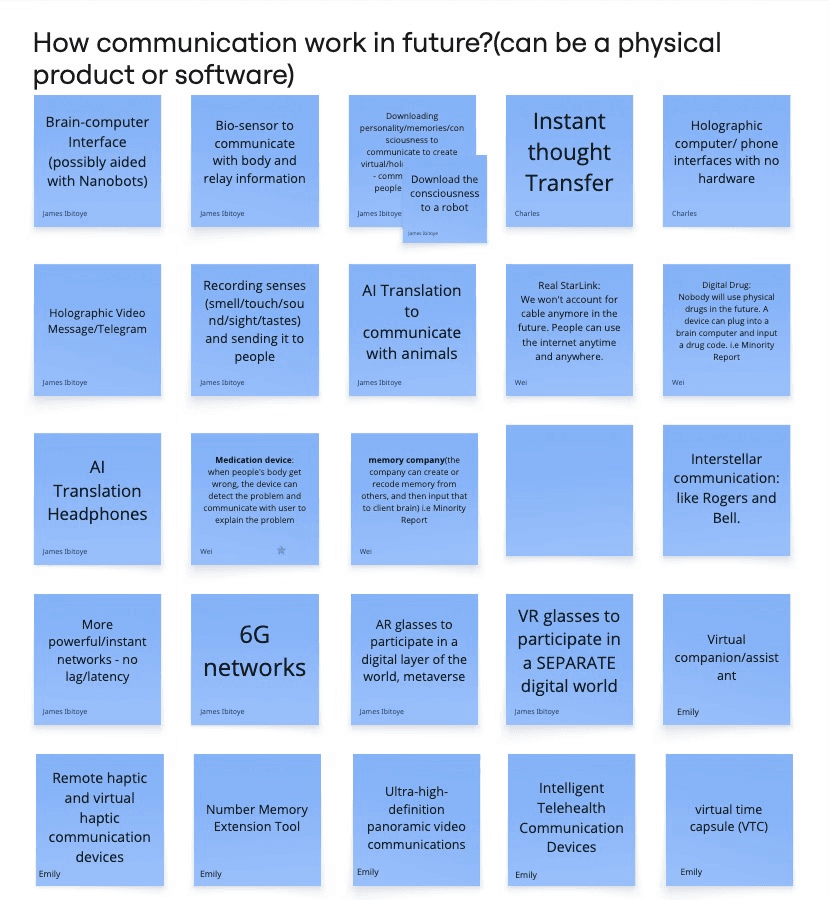
We then Brainstormed and researched 100 Years Into the Future. To imagine future trajectories, we as a team explored

Speculative tech

AI-mediated communication

AR/VR immersion

emerging interfaces

Sensor-based communication

6G & post-network infrastructures

Memory and neural communication

Digital companions + assistants

We then Brainstormed and researched 100 Years Into the Future. To imagine future trajectories, we as a team explored

Speculative tech

AI-mediated communication

AR/VR immersion

emerging interfaces

Sensor-based communication

6G & post-network infrastructures

Memory and neural communication

Digital companions + assistants

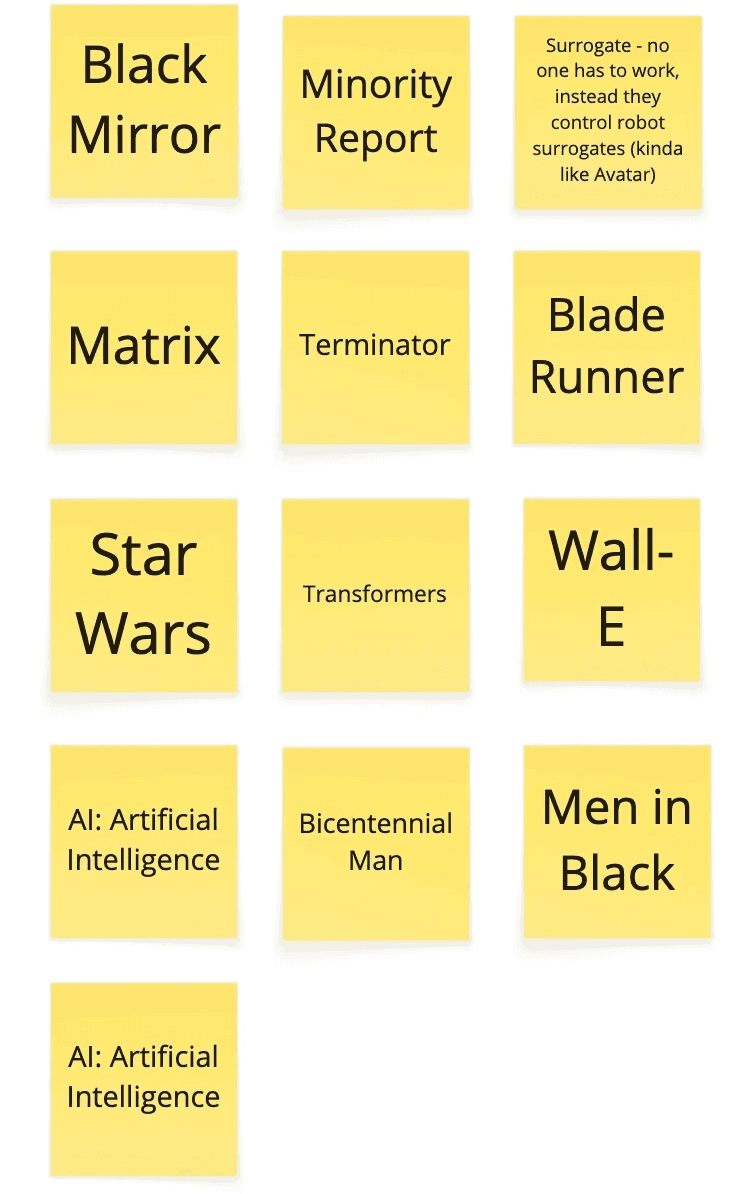
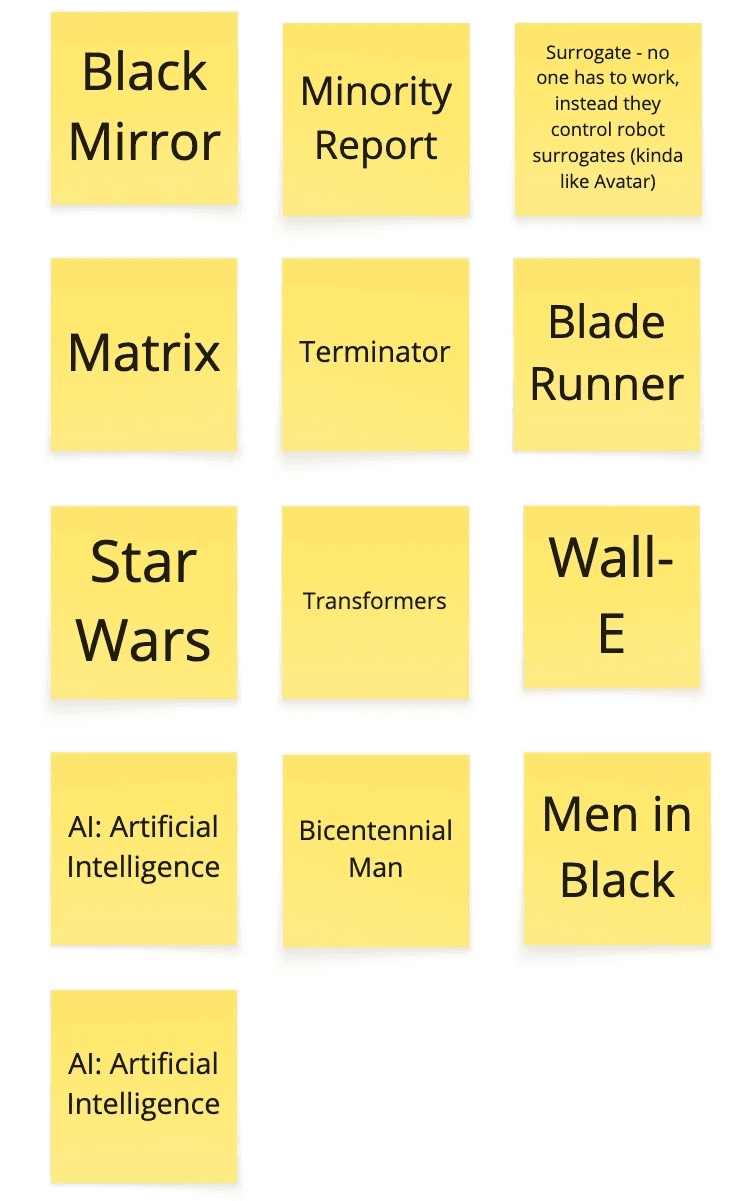
To help expand our imagination of what future communication could look like, we explored sci-fi films and media that visualize advanced interfaces and speculative technologies. From this research, we drew

To help expand our imagination of what future communication could look like, we explored sci-fi films and media that visualize advanced interfaces and speculative technologies. From this research, we drew

Ideas for futuristic interaction patterns

Examples of how memory and AI are portrayed

Visual language for AR/VR and holographic systems

Speculative scenarios around surveillance and data

Inspiration for how technology shapes everyday life

Ideas for futuristic interaction patterns

Examples of how memory and AI are portrayed

Visual language for AR/VR and holographic systems

Speculative scenarios around surveillance and data

Inspiration for how technology shapes everyday life

Ideas for futuristic interaction patterns

Examples of how memory and AI are portrayed

Visual language for AR/VR and holographic systems

Speculative scenarios around surveillance and data

Inspiration for how technology shapes everyday life

These references helped us push beyond realistic constraints and imagine communication as something more immersive, intelligent, and experience-driven.

These references helped us push beyond realistic constraints and imagine communication as something more immersive, intelligent, and experience-driven.

These grouped ideas became the foundation for completing our 200 year timeline because they allowed us to map how past innovations led to the emerging patterns we were seeing and how those patterns could extend into the future.

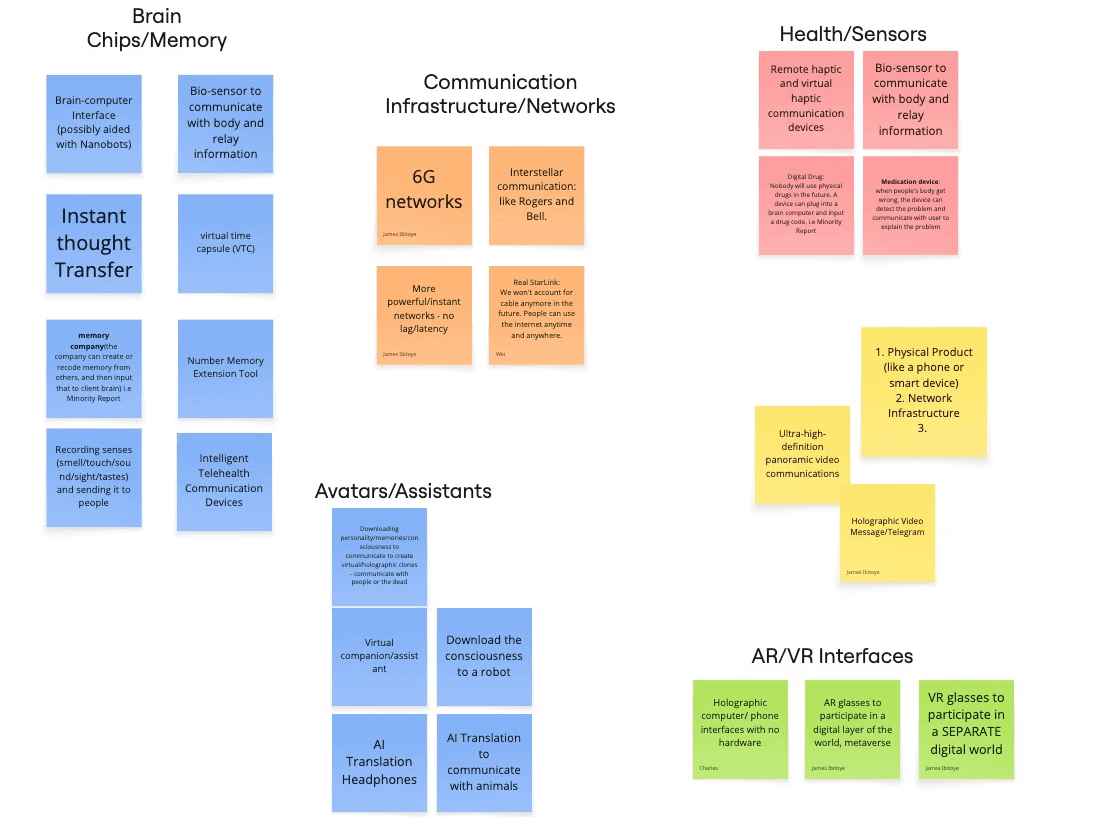
As we continued brainstorming, we gathered our ideas into key categories such as Brain and Memory interfaces, AR and VR communication, intelligent assistants, next generation networks, and sensor based communication.


Organizing our thinking this way helped us identify the major forces shaping how communication might evolve.


These grouped ideas became the foundation for completing our 200 year timeline because they allowed us to map how past innovations led to the emerging patterns we were seeing and how those patterns could extend into the future.

As we continued brainstorming, we gathered our ideas into key categories such as Brain and Memory interfaces, AR and VR communication, intelligent assistants, next generation networks, and sensor based communication.


Organizing our thinking this way helped us identify the major forces shaping how communication might evolve.

As we continued brainstorming, we gathered our ideas into key categories such as Brain and Memory interfaces, AR and VR communication, intelligent assistants, next generation networks, and sensor based communication.


Organizing our thinking this way helped us identify the major forces shaping how communication might evolve.


These grouped ideas became the foundation for completing our 200 year timeline because they allowed us to map how past innovations led to the emerging patterns we were seeing and how those patterns could extend into the future.

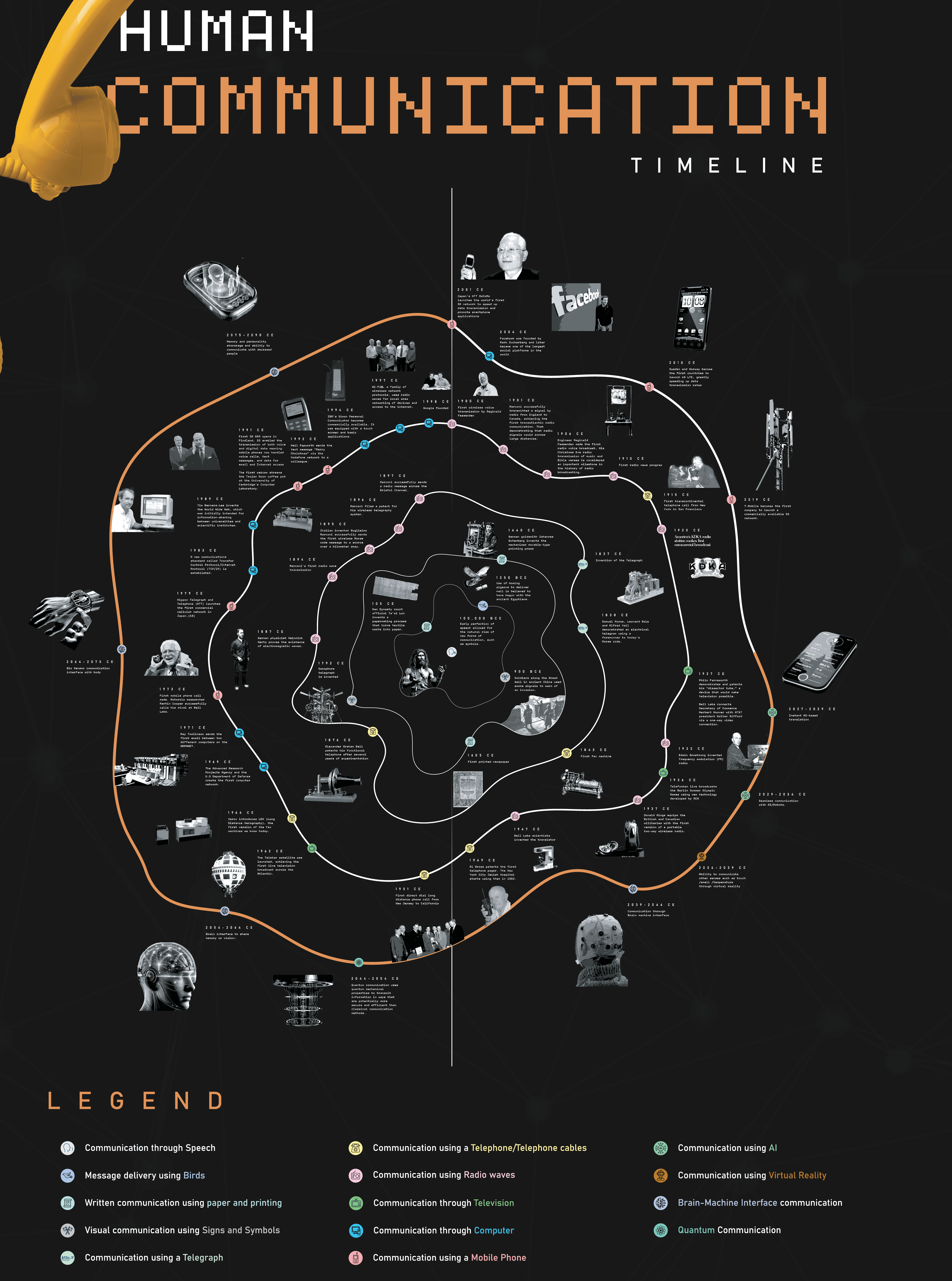
With our ideas organized into clear groups, we moved into creating the full communication timeline. This timeline combined one hundred years of past developments with one hundred years of projected future possibilities. It helped us see how communication has changed over time and how the ideas from our brainstorming could realistically extend into the next century.

With our ideas organized into clear groups, we moved into creating the full communication timeline. This timeline combined one hundred years of past developments with one hundred years of projected future possibilities. It helped us see how communication has changed over time and how the ideas from our brainstorming could realistically extend into the next century.

This timeline revealed a consistent historical pattern

This timeline revealed a consistent historical pattern

This timeline revealed a consistent historical pattern

Each communication breakthrough increases the immediacy, fidelity, and scale of human expression

Each communication breakthrough increases the immediacy, fidelity, and scale of human expression

Concept Development

Imagining Future Communication

Concept Development

Imagining Future Communication

Concept Development

Imagining Future Communication

Concept Development

Imagining Future Communication

Concept Development

From Timeline Insights to Early Concepts

Concept Development

Imagining Future Communication

If communication has progressed from spoken words to text, images, video, and immersive AR, what comes next?

If communication has progressed from spoken words to text, images, video, and immersive AR, what comes next?

If communication has progressed from spoken words to text, images, video, and immersive AR, what comes next?

If communication has progressed from spoken words to text, images, video, and immersive AR, what comes next?

From the timeline, we began to see a clear pattern: every major communication shift moves toward greater immersion, intelligence, and integration into everyday perception. Mapping the past and projecting the next hundred years forward showed us that communication was gradually shifting away from traditional messages and toward more embodied, experience-based forms.

From the timeline, we began to see a clear pattern: every major communication shift moves toward greater immersion, intelligence, and integration into everyday perception. Mapping the past and projecting the next hundred years forward showed us that communication was gradually shifting away from traditional messages and toward more embodied, experience-based forms.


These insights directly informed our early concept development. They helped us shape two visual directions: one exploring how people might revisit and re-experience memories as part of communication, and another showing how contact lens based AR translation could make real time interpretation feel natural and effortless. The videos became our first way of expressing what communication might look like when it becomes integrated into how we see and remember.

These insights directly informed our early concept development. They helped us shape two visual directions: one exploring how people might revisit and re-experience memories as part of communication, and another showing how contact lens based AR translation could make real time interpretation feel natural and effortless. The videos became our first way of expressing what communication might look like when it becomes integrated into how we see and remember.

A concept for contact lenses that let you experience past moments as if you’re there again.

A concept for contact lenses that translate the world around you in real time through AR.
To bring these concepts to life, we shot the videos as a small team using camera stabilizers to create smooth, natural movement. We filmed in a local café that was closed for the day, and the owner kindly let us use the space to support his business. The shoot became a memorable moment for all of us this was one moment that brought the team closer.

To bring these concepts to life, we shot the videos as a small team using camera stabilizers to create smooth, natural movement. We filmed in a local café that was closed for the day, and the owner kindly let us use the space to support his business. The shoot became a memorable moment for all of us this was one moment that brought the team closer.

Development

The Pivot moment

Development

The Pivot moment

Development

The Pivot moment

Development

The Pivot moment

Concept Development

From Timeline Insights to Early Concepts

Development

The Pivot moment

Near the end of the first semester, our project reached a difficult turning point. After finishing the videos, it became clear that our group no longer had a shared focus on building the prototype. Some members were unsure how to move forward, and the momentum we had had faded. As deadlines approached, it felt like the project was losing direction entirely.


Instead of letting the idea stall, another student and I decided to take initiative and restart the project with whatever we could realistically deliver. I began reviewing our research, insights, and concept videos to determine what was essential to communicate at this stage. My goal was to create enough structure and content for the group to regroup and have something concrete to present. This moment became the pivot point that shaped the entire second half of our project, pushing us toward a clearer design direction and a more grounded plan for the final prototype and exhibition.

Near the end of the first semester, our project reached a difficult turning point. After finishing the videos, it became clear that our group no longer had a shared focus on building the prototype. Some members were unsure how to move forward, and the momentum we had had faded. As deadlines approached, it felt like the project was losing direction entirely.


Instead of letting the idea stall, another student and I decided to take initiative and restart the project with whatever we could realistically deliver. I began reviewing our research, insights, and concept videos to determine what was essential to communicate at this stage. My goal was to create enough structure and content for the group to regroup and have something concrete to present. This moment became the pivot point that shaped the entire second half of our project, pushing us toward a clearer design direction and a more grounded plan for the final prototype and exhibition.

Development

The Turning Point

Development

The Turning Point

Development

The Turning Point

Development

The Turning Point

Concept Development

From Timeline Insights to Early Concepts

Development

The Turning Point

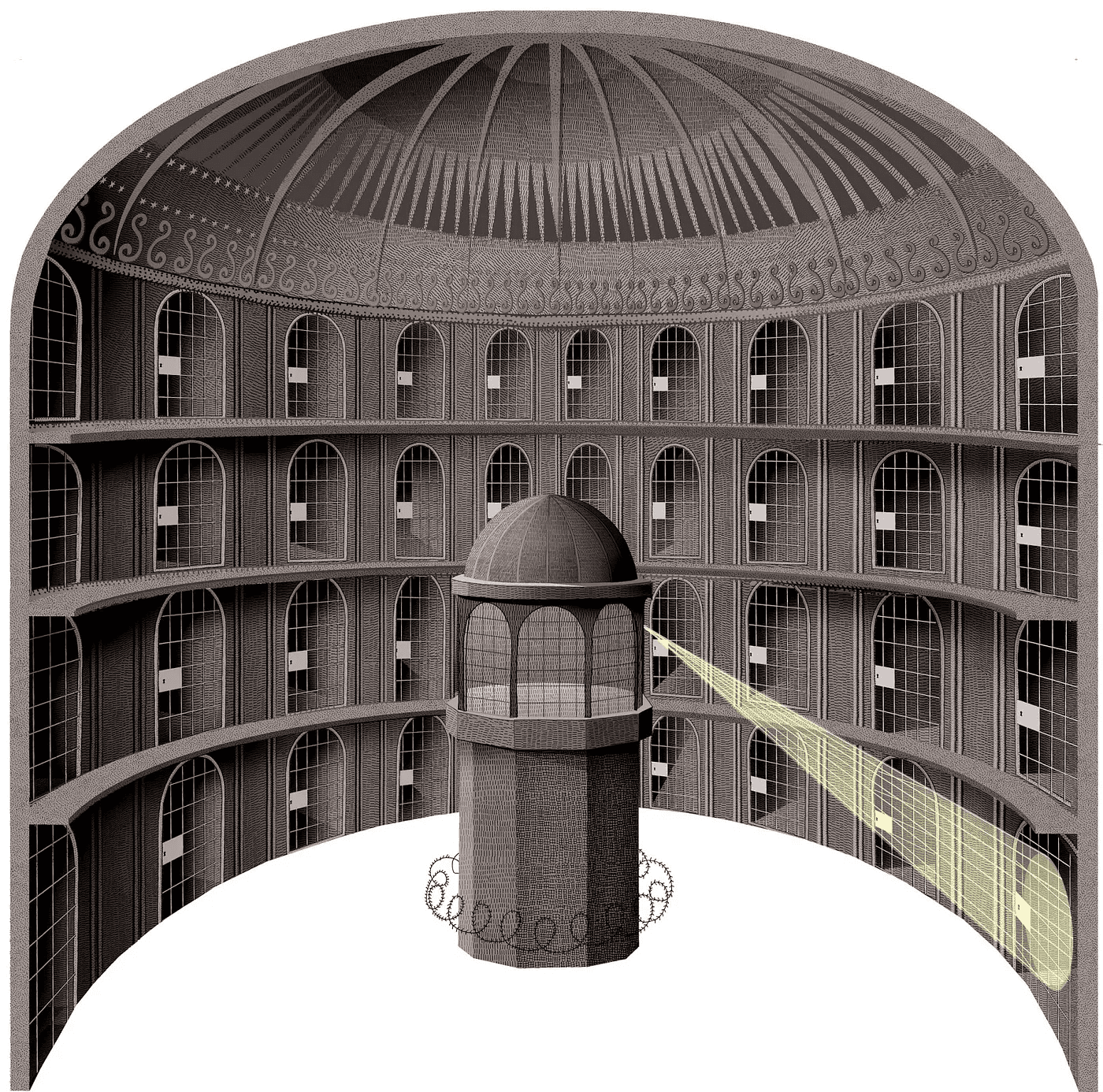
At the beginning of the second semester, we met with our instructor to discuss how to strengthen the direction of our project and clarify the system around our concept. During this conversation, we explored the idea of the Panopticon, a model where a central observer can see everyone inside the structure. Thinking about this scenario helped us realize that a memory-based communication system could also operate on two levels: the personal, consumer-facing side that enhances everyday experiences, and a larger, system-level perspective that monitors and interprets those same memories. This discussion became a turning point. It helped us shift from focusing only on the user experience to examining how the technology could function within a broader societal context. From this moment forward, our project evolved into a two-sided exploration of both consumer use and potential surveillance implications.

At the beginning of the second semester, we met with our instructor to discuss how to strengthen the direction of our project and clarify the system around our concept. During this conversation, we explored the idea of the Panopticon, a model where a central observer can see everyone inside the structure. Thinking about this scenario helped us realize that a memory-based communication system could also operate on two levels: the personal, consumer-facing side that enhances everyday experiences, and a larger, system-level perspective that monitors and interprets those same memories. This discussion became a turning point. It helped us shift from focusing only on the user experience to examining how the technology could function within a broader societal context. From this moment forward, our project evolved into a two-sided exploration of both consumer use and potential surveillance implications.

Illustration of a Panopticon Prison

Package 1

Defining the System and Design Direction

Package 1

Defining the System and Design Direction

Package 1

Defining the System and Design Direction

Package 1

Defining the System and Design Direction

Concept Development

From Timeline Insights to Early Concepts

Package 1

Defining the System and Design Direction

Following our shift toward a two-sided concept, the next assignment asked each group to create two design packages. Package 1 focused on defining the system behind our product, while Package 2 focused on visual branding. I contributed primarily to Package 1, which centered on building the research foundation and outlining the structure of our memory-based communication system.


Package 1 included several key components: our vision statement, personas, core values, process charts, and an ethical problem map.


Package 2 included branding. - we had a dedicated person in our group doing all our graphic work during this process.


Following our shift toward a two-sided concept, the next assignment asked each group to create two design packages. Package 1 focused on defining the system behind our product, while Package 2 focused on visual branding. I contributed primarily to Package 1, which centered on building the research foundation and outlining the structure of our memory-based communication system.


Package 1 included several key components: our vision statement, personas, core values, process charts, and an ethical problem map.


Following our shift toward a two-sided concept, the next assignment asked each group to create two design packages. Package 1 focused on defining the system behind our product, while Package 2 focused on visual branding. I contributed primarily to Package 1, which centered on building the research foundation and outlining the structure of our memory-based communication system.


Package 1 included several key components: our vision statement, personas, core values, process charts, and an ethical problem map.


Package 2 included branding. - we had a dedicated person in our group doing all our graphic work during this process.


Why Prometheus?

Before defining our vision and core values, we first needed to establish why our system is called Prometheus. The name, drawn from the Titan who gifted fire to humanity, symbolizes the act of unlocking a new form of power. For our project this power was the augmentation of human memory. Prometheus represents the ability to illuminate, preserve, and retrieve experiences in ways previously impossible. This meaning became the anchor for how we shaped the system’s direction, guiding our vision, values, and design decisions as we imagined a future where memory becomes an accessible, integrated layer of everyday life


Our Vision

We began by articulating a vision that described the role our system plays in the future of communication. This vision connected our timeline insights with the world we were designing toward. It helped define the system not just as a tool for recording memories, but as a new layer of communication woven into everyday perception.

"Prometheus transforms human experience through smart AR lenses

and glasses that seamlessly record, organize, and retrieve memories. Our technology bridges the gap between lived experiences and perfect recall, offering consumers a way to improve their lives and store precious memories."

Our Values

Our Values

Concept Development

From Timeline Insights to Early Concepts

With our vision established, the next step was to define the principle values that would guide how the system should behave. These core values helped translate the vision into practical design intentions and ensured that every part of the experience aligned with our understanding of future communication.

With our vision established, the next step was to define the principle values that would guide how the system should behave. These core values helped translate the vision into practical design intentions and ensured that every part of the experience aligned with our understanding of future communication.

1

1

1

1

Memory Enhancement

Extending human recall capabilities beyond biological limits

Memory Enhancement

Extending human recall capabilities beyond biological limits

Memory Enhancement

Extending human recall capabilities beyond biological limits

Memory Enhancement

Extending human recall capabilities beyond biological limits

Memory Enhancement

Extending human recall capabilities beyond biological limits

2

2

2

2

Seamless Integration

Technology that blends naturally into daily life

Seamless Integration

Technology that blends naturally into daily life

Seamless Integration

Technology that blends naturally into daily life

Seamless Integration

Technology that blends naturally into daily life

Seamless Integration

Technology that blends naturally into daily life

3

3

3

3

Intelligent Organization

AI-powered categorization and retrieval of memories

Intelligent Organization

AI-powered categorization and retrieval of memories

Intelligent Organization

AI-powered categorization and retrieval of memories

Intelligent Organization

AI-powered categorization and retrieval of memories

Intelligent Organization

AI-powered categorization and retrieval of memories

These elements helped us articulate how the product would work from both the consumer perspective and the system-level perspective we had begun exploring. Working on this package allowed us to translate the ideas from our pivot into a more structured direction. It made the concept more cohesive and set the groundwork for the prototype and exhibition experience that came later.

Personas

Personas

Mia, Marketing Executive

Mia, Marketing Executive

Goals

  • Values convenience over privacy concerns

  • Sees no harm in passive surveillance

  • Wants seamless integration into daily life

  • Aims to improve organization at work and home

Motivation

  • Capture important client conversations for later reference

  • Record meaningful family moments with her children

  • Find misplaced items quickly

  • Organize memories by events and locations

Summary

Mia represents the everyday consumer who wants memory support to reduce stress and improve both personal and professional clarity.

Frustration

  • Frequently forgets details from meetings

  • Misses important personal moments

  • Everyday items often go missing

  • Traditional note-taking disrupts conversations

Elliott, Intelligence Agency Deputy Director

Goals

  • Access civilian memory data without traditional warrants

  • Identify and neutralize threats

  • Gather comprehensive evidence

  • Monitor populations for dissident activity

Motivation

  • Believes surveillance is essential for national security

  • Values AI automation to improve accuracy

  • Seeks plausible deniability

  • Wants to maximize data access with minimal oversight

Summary

Elliott demonstrates the darker, high-stake uses of the system—showing how a powerful memory technology can also enable government overreach.

Frustration

  • Current surveillance leaves information gaps

  • Legal restrictions slow investigations

  • Public resistance to monitoring

  • Difficulty attributing surveillance activities

Ana, Travel Vlogger

Goals

  • Capture authentic travel experiences without holding a camera

  • Revisit and rework memories for content creation

  • Automatically tag locations and encounters

  • Share select memories creatively with her audience

Motivation

  • Traditional cameras interrupt her experience

  • Often misses spontaneous moments

  • Difficulties recalling details while creating content

  • Current tools limit how immersive her storytelling can be

Summary

Ana shows how Prometheus can empower creators who need immersive capture and effortless access to detailed, context-rich memories.

Frustration

  • Values cutting-edge tools for differentiation

  • Wants to stay present while documenting

  • Balances sharing with maintaining some privacy

  • Seeks new ways to innovate content

User Journey

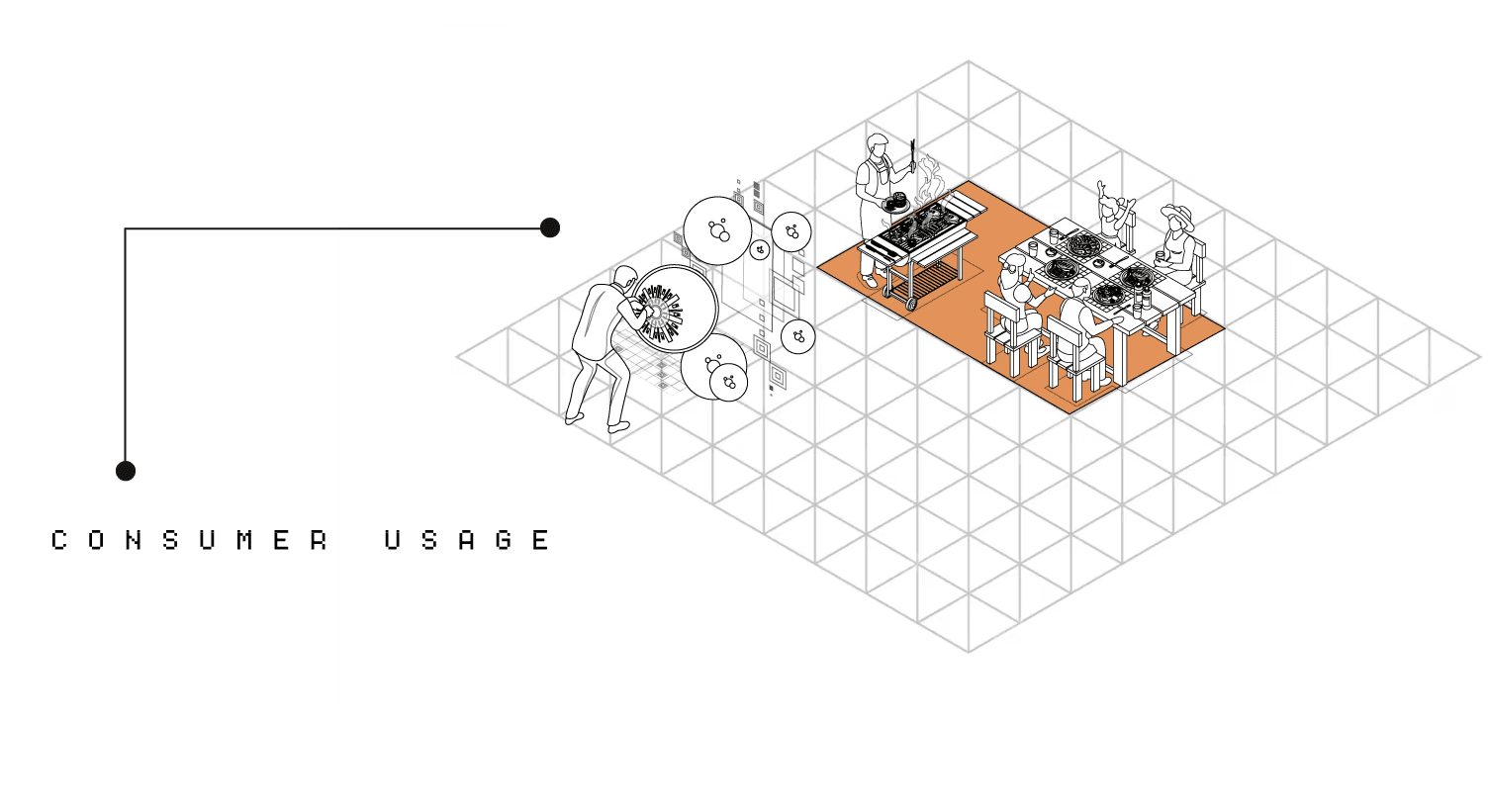
To understand how Prometheus would operate in the real world, I mapped two parallel user journeys: one for everyday consumers and another for government or institutional users

General User Journey

Personal, Seamless, Supportive

Designed to feel intuitive and effortless.

Capture

Prometheus passively records small moments throughout the day.

Review

Prometheus passively records small moments throughout the day.

Organize

AI tags and sorts memories automatically.

Recall & Share

Memories become easy to access, relive, or selectively share.
Government User Journey
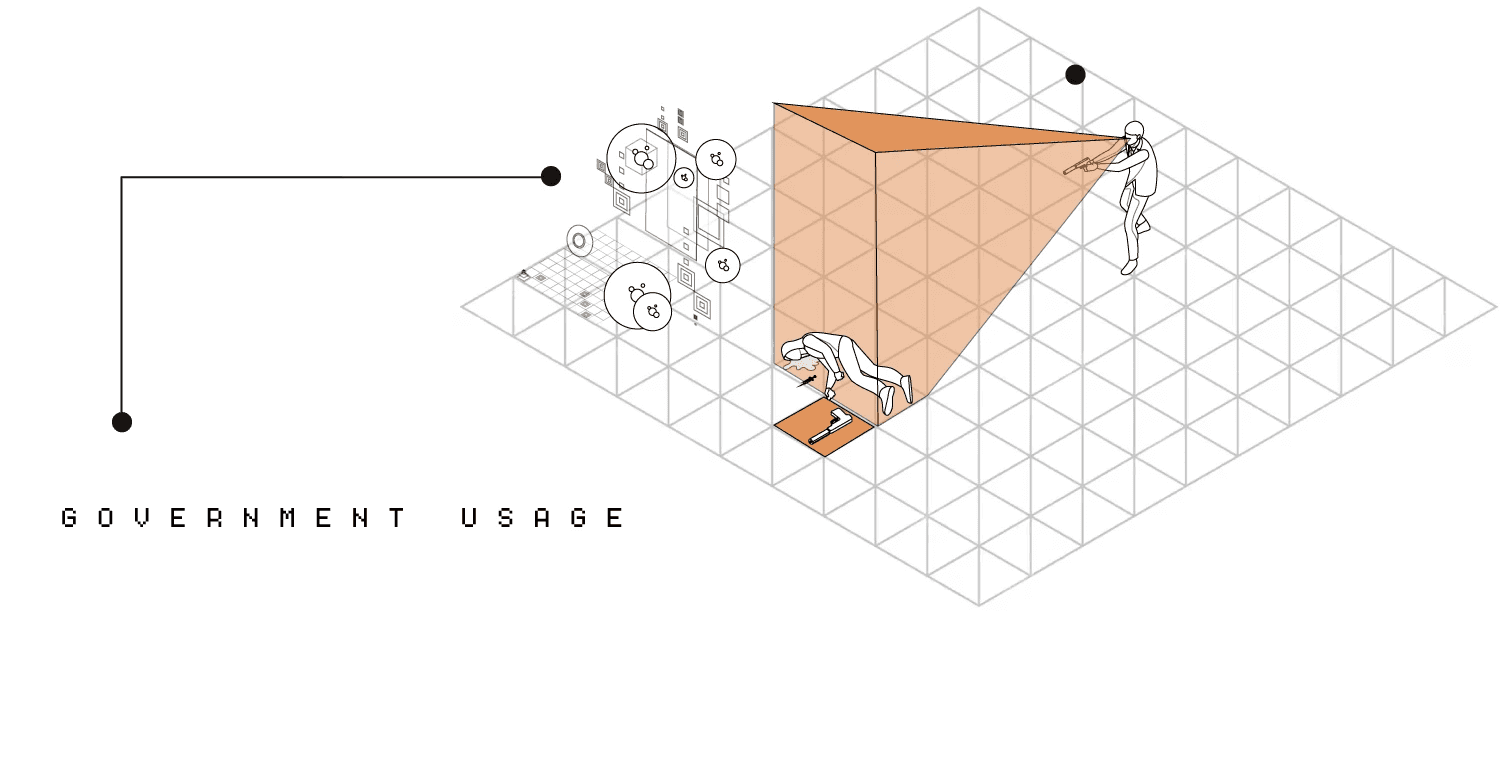
Systematic, Analytical, High-Control

Presented as a structured, data-driven flow.

Data Mirroring

Citizen recordings feed into secure databases.

AI Filtering

Systems identify faces, locations, and events at scale.

Extraction

Investigators pull specific timelines or individuals.

Enforcement

Flagged activity triggers alerts and response

Sorry still working on this case study come back soon

Sorry still working on this case study come back soon